Do you have a penny?
2025
Designed and built fountain sculpture; wood, peel-and-stick tile, found objects, pennies, circulating water
This piece explores wish-making, rituals, and the lingering moment before a coin is tossed in exchange for a wish. Installed as a functioning fountain, Do you have a penny? echoes the casual language often heard near fountains or wishing wells. The title reframes the act of tossing a coin, not as passive, but as a quiet form of belief, shaped by hope and superstition.
I Love the Cold
2025
Built wooden window sill; pink curtains hand-embroidered with “I knew the risk when I took it”, curtain rod, fan, sound collage of wind, chimes, and voicemails
Built wooden window sill; pink curtains hand-embroidered with “I knew the risk when I took it”, curtain rod, fan, sound collage of wind, chimes, and voicemails
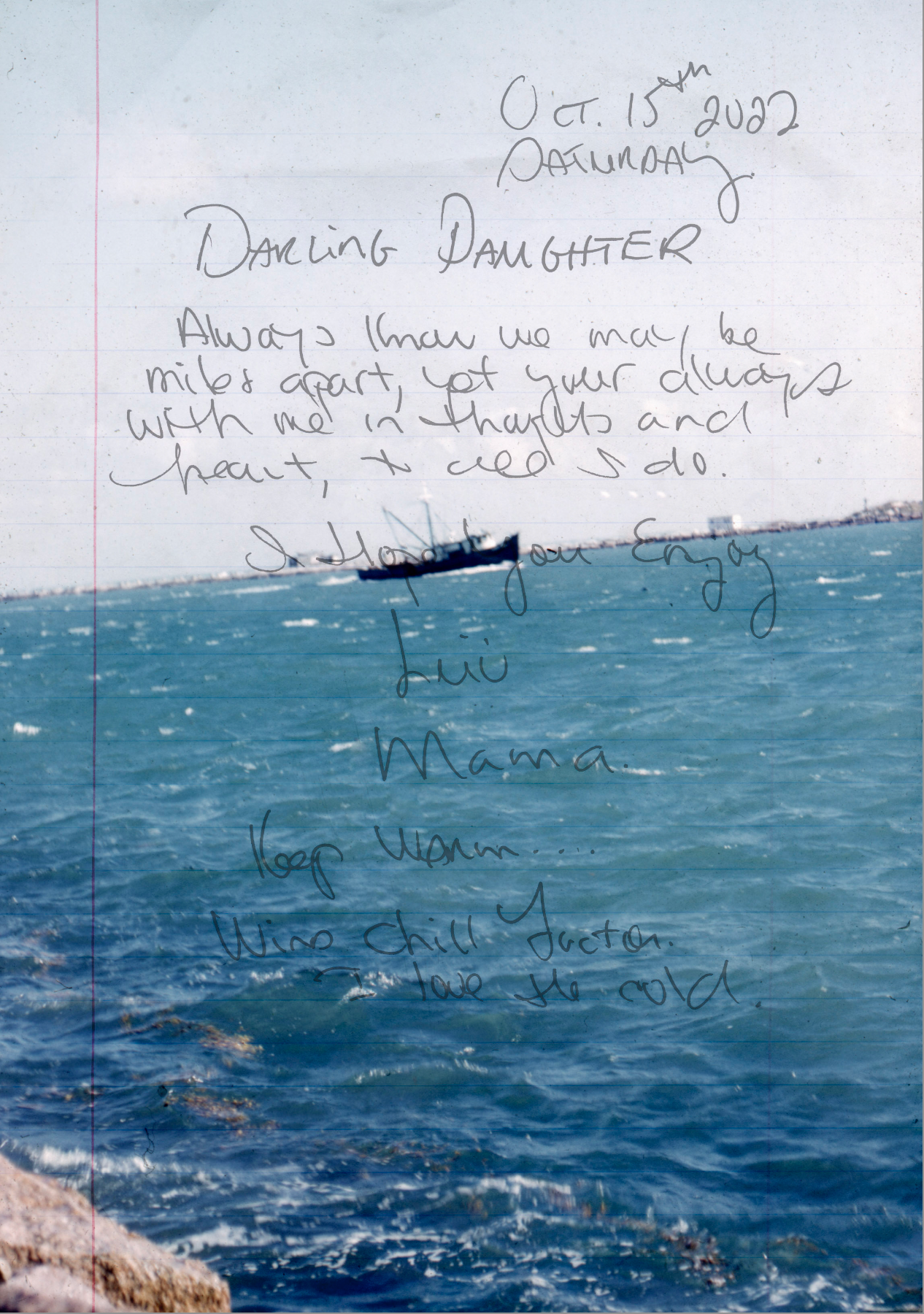
I Love the Cold centers on choosing something despite knowing it may not work out. A soft, hand-stitched pink curtain serves as a confession, marking an awareness that comes with vulnerability. The fan’s wind, paired with a sound collage of chimes and voicemails from my mother, creates a moment of reflection on that choice. By allowing the cold to remain, the piece evokes the feeling of standing at the edge of something familiar. Together, these materials create a space that holds both comfort and consequence, where love feels familiar yet fleeting, like cold air slipping through an open window.

Stalker
2026
35 mm photography
35 mm photography
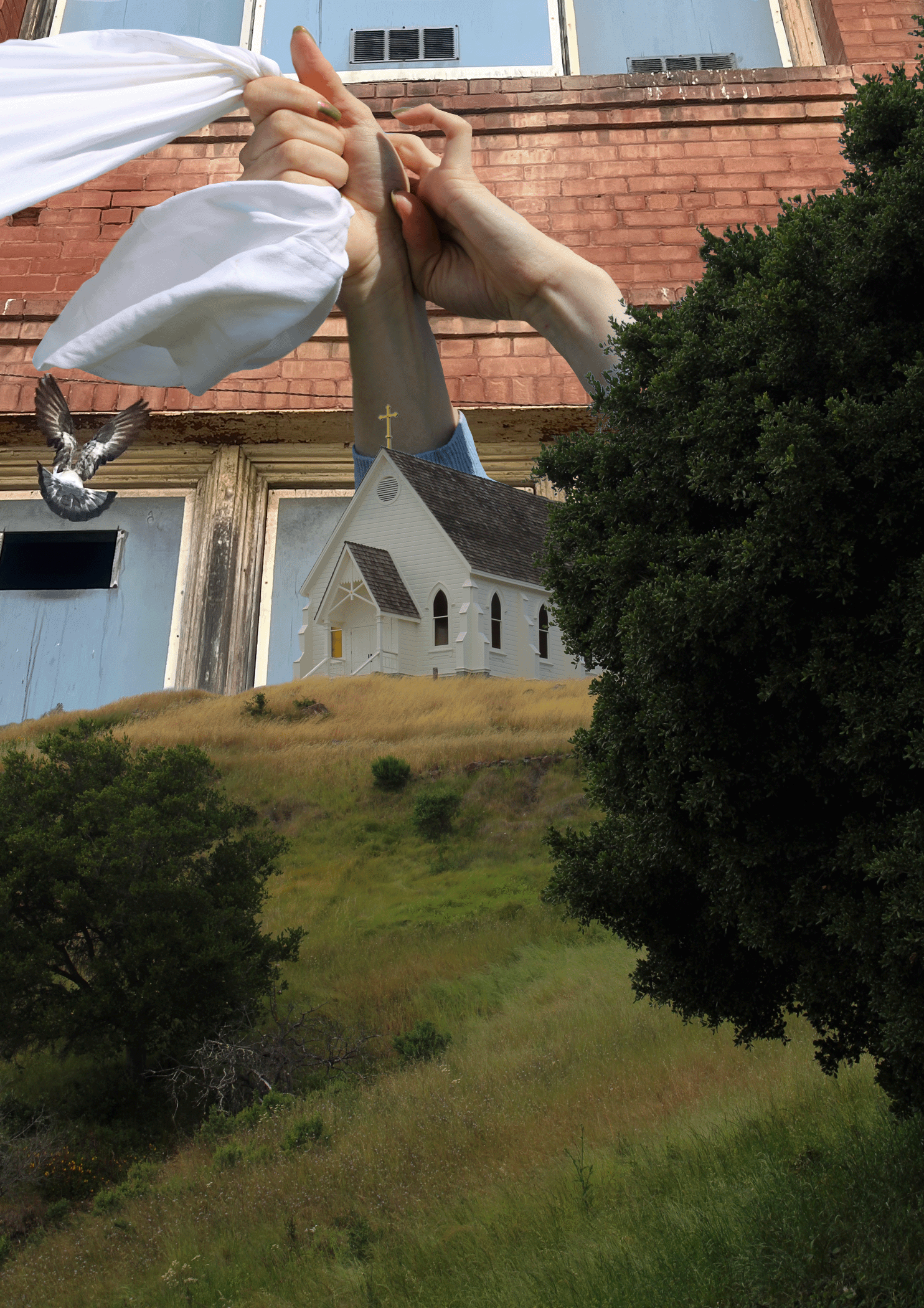
Stalker explores surveillance through staged photographs that position me as being stalked outside my home. The work considers stalking as an intimate form of surveillance that operates differently in physical contexts than in digital ones. By placing myself in the position of subject, the images reflect paranoia and the discomfort of being watched, or subjected to unwanted observation. The photographs move between fiction and reality, revealing the camera’s ability to transform familiar scenes into something unsettling.
Cast
Inkjet prints on paper, stenciled and hand-cut photo paper, and photo collage
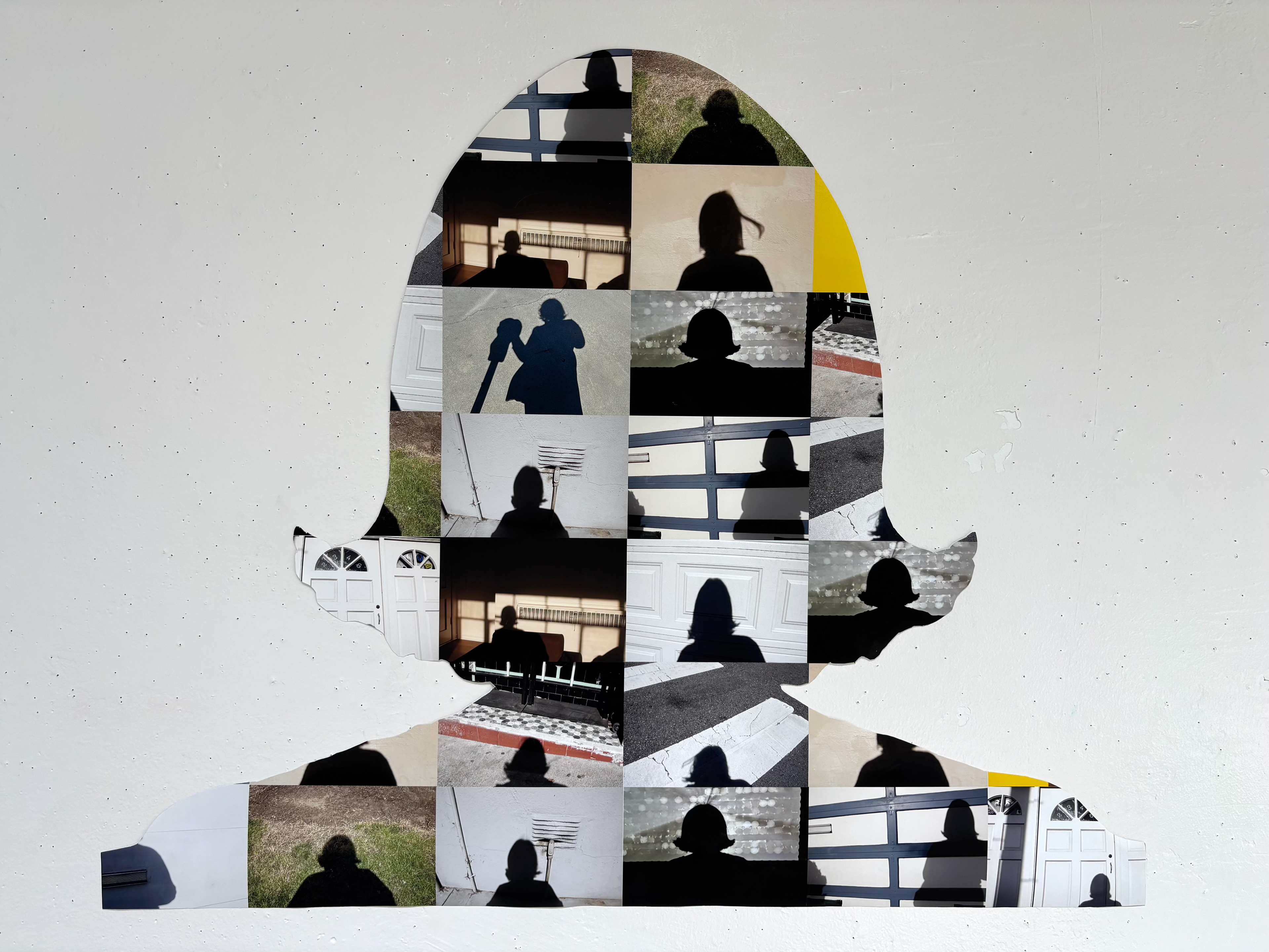
This 15-photo series began when I noticed the sharp outline of my shadow, newly defined by the shape of my recent haircut. My silhouette became more distinguishable, an ever-present, weightless marker of self that followed me across sidewalks, walls, and fences. I began photographing these moments instinctively, drawn to how my shadow interacted with the world. What started as simple documentation evolved into a meditation on change, identity, and an obsession with tracking my shadow as it moved through space and time. My shadow became a kind of evidence of being, fleeting, shifting, dissolving, mirroring how I experienced myself during a transition period. I was also inspired by cartoons where a distinctive shadow often signaled a strong or recognizable character. My final piece, a collage of these shadow portraits in the shape of my silhouette intertwining the subject with the distinguishable form I first began noticing months ago, merging the shifting presence of my shadow with the evolving shape of my identity.
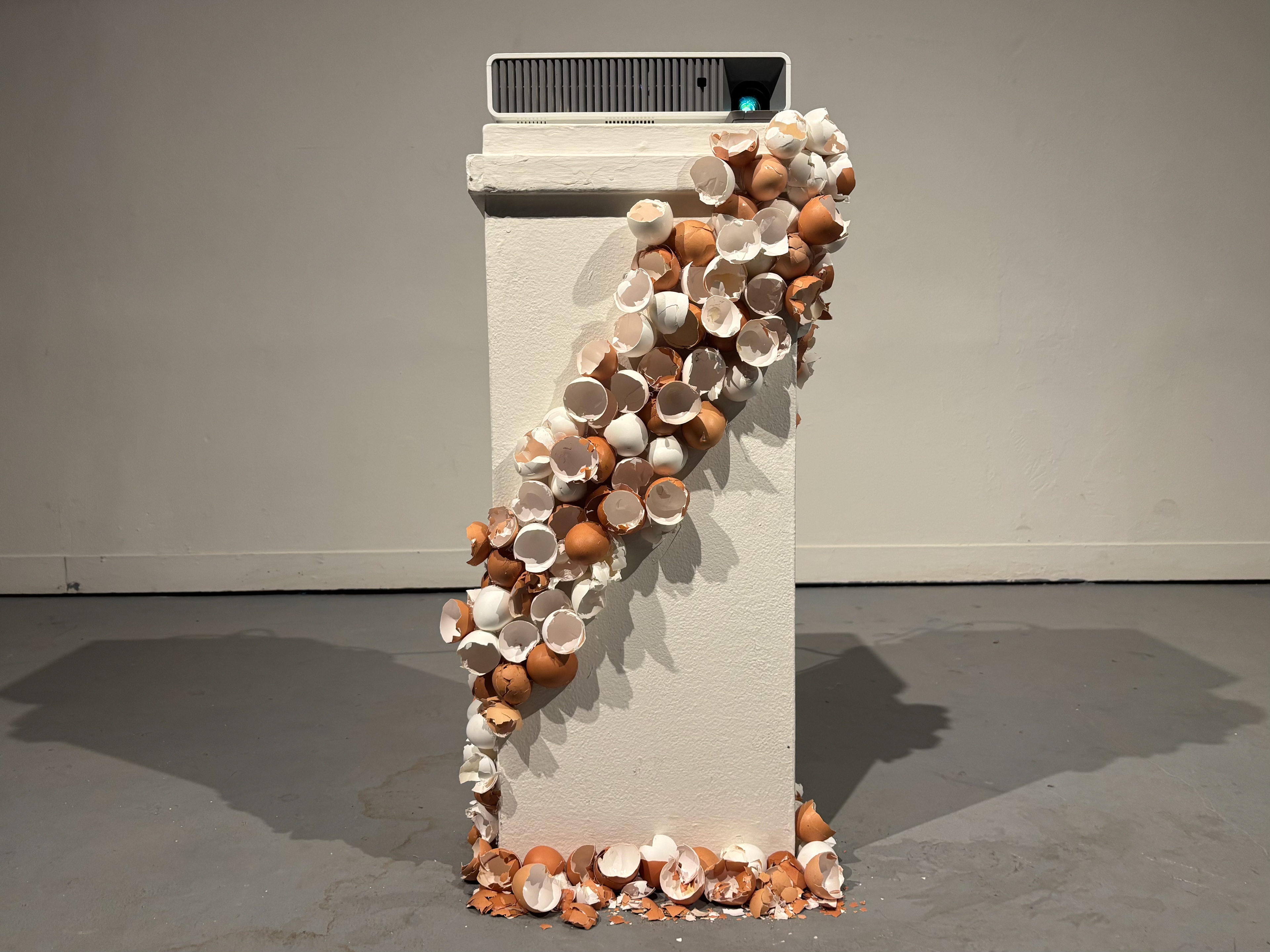
Walking on Eggshells (2025)
Eggshells, tape, thread, staples, glue, pedestal, video projection (5 minutes)
Eggshells, tape, thread, staples, glue, pedestal, video projection (5 minutes)
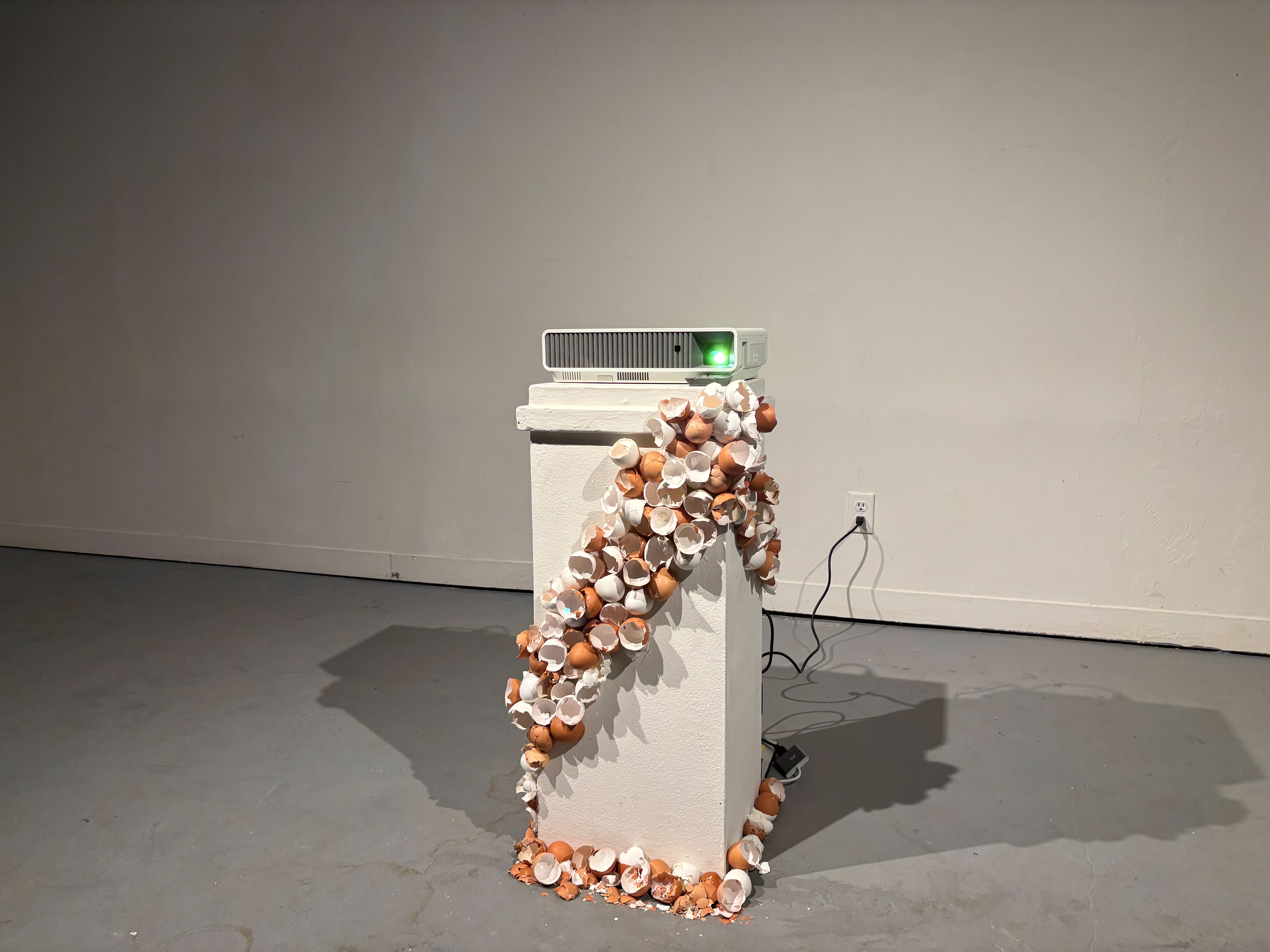
Walking on Eggshells draws from the metaphor of fragility, the idea that eggshells are inherently delicate, and that the act of walking on them guarantees their destruction. I re-envisioned this phrase by attempting four different methods of repair: taping, sewing, stapling, and gluing broken eggshells back together. Working from their ruins, I tried to mend something fundamentally unfixable. The process was intentionally organic, delicate, and decomposable, rooted in an interest in materials that are temporary and unstable. Each method failed, reinforcing the idea that some things resist repair and may be better left alone. The final sculpture became a decorative object placed on a pedestal, which held a five-minute video projection documenting my repeated attempts to reconstruct a single egg from its shattered shells.
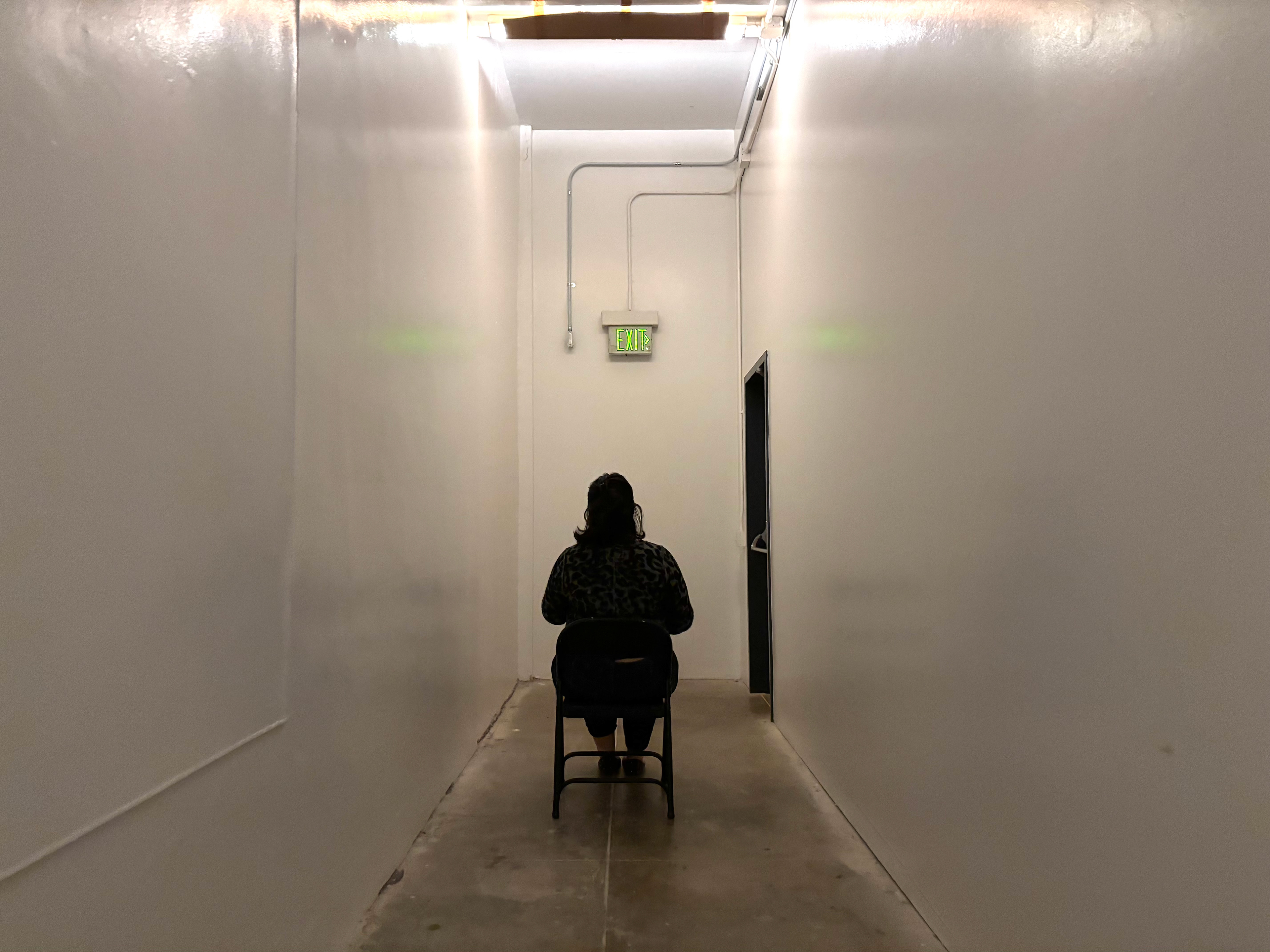
Your Secret Is Safe With Me (2025)
Wood, wire, paint, instructions, participants, 19 personal confessions, artist
Wood, wire, paint, instructions, participants, 19 personal confessions, artist
Your Secret Is Safe With Me is a participatory performance involving 19 individual confessions, shared in one-on-one exchanges. The number of confessions I prepared matched the number of participants, allowing each person to receive a separate confession from me in return. Through these private encounters, I observed how shame isolates people, often pushing them into silence. The work uses reciprocity to counter that isolation, creating a space for openness and connection.
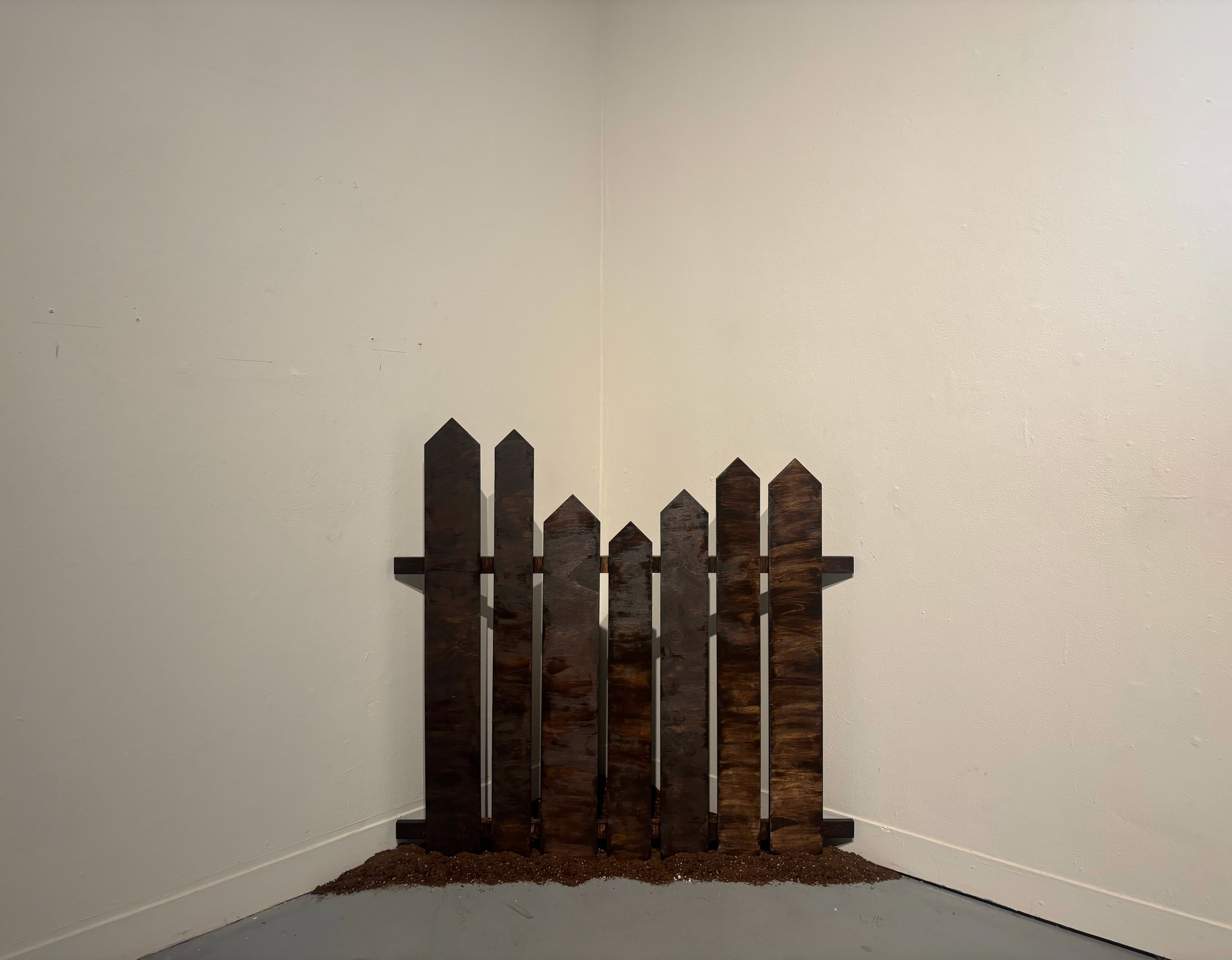
The Periphery (2025)
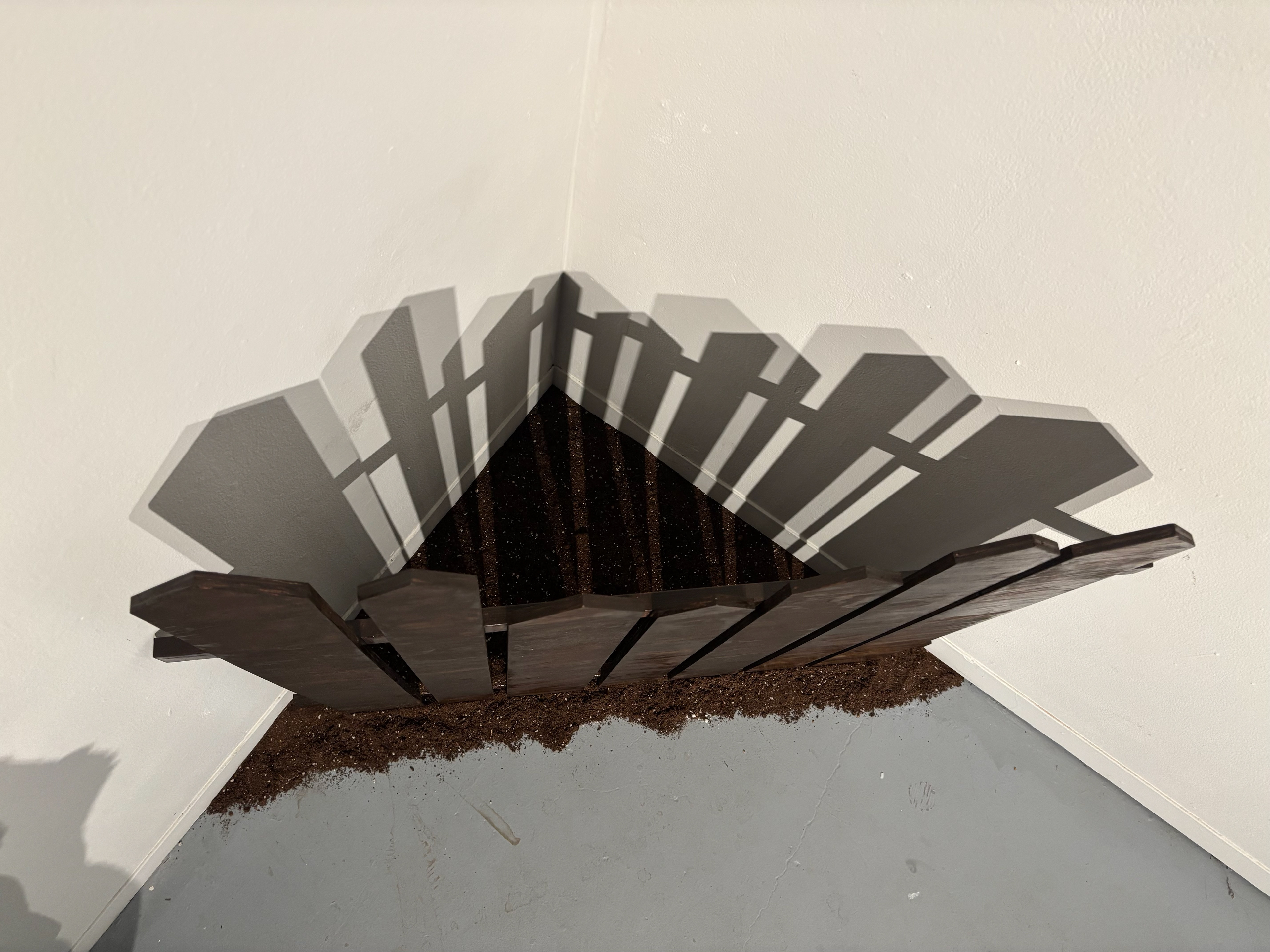
Built fence; Wood, dark stain, soil, audio collage (car ambience, ticking, hourly chime)
Built fence; Wood, dark stain, soil, audio collage (car ambience, ticking, hourly chime)
In the corner of a room, a freestanding fence rises from soil. Overhead, a looping audio collage plays: passing cars, the chime of a grandfather clock each minute, and a persistent, steady tick. The work explores grief, memory, and emotional boundaries through the symbolic structure of a fence, an object that both marks and denies access. Referencing my late grandmother’s home, the dark stain echoes the exterior of her house, the soil refers to the garden she used to tend to, and the ticking recalls the ongoing presence of a clock that may still be running in her absence. The sound of passing cars suggests life continuing beyond personal stillness. The Periphery reflects the strange familiarity of something once known but now closed off, a house that still exists but is inaccessible. The fence becomes not just an object but a place.
Dreaming (2025)
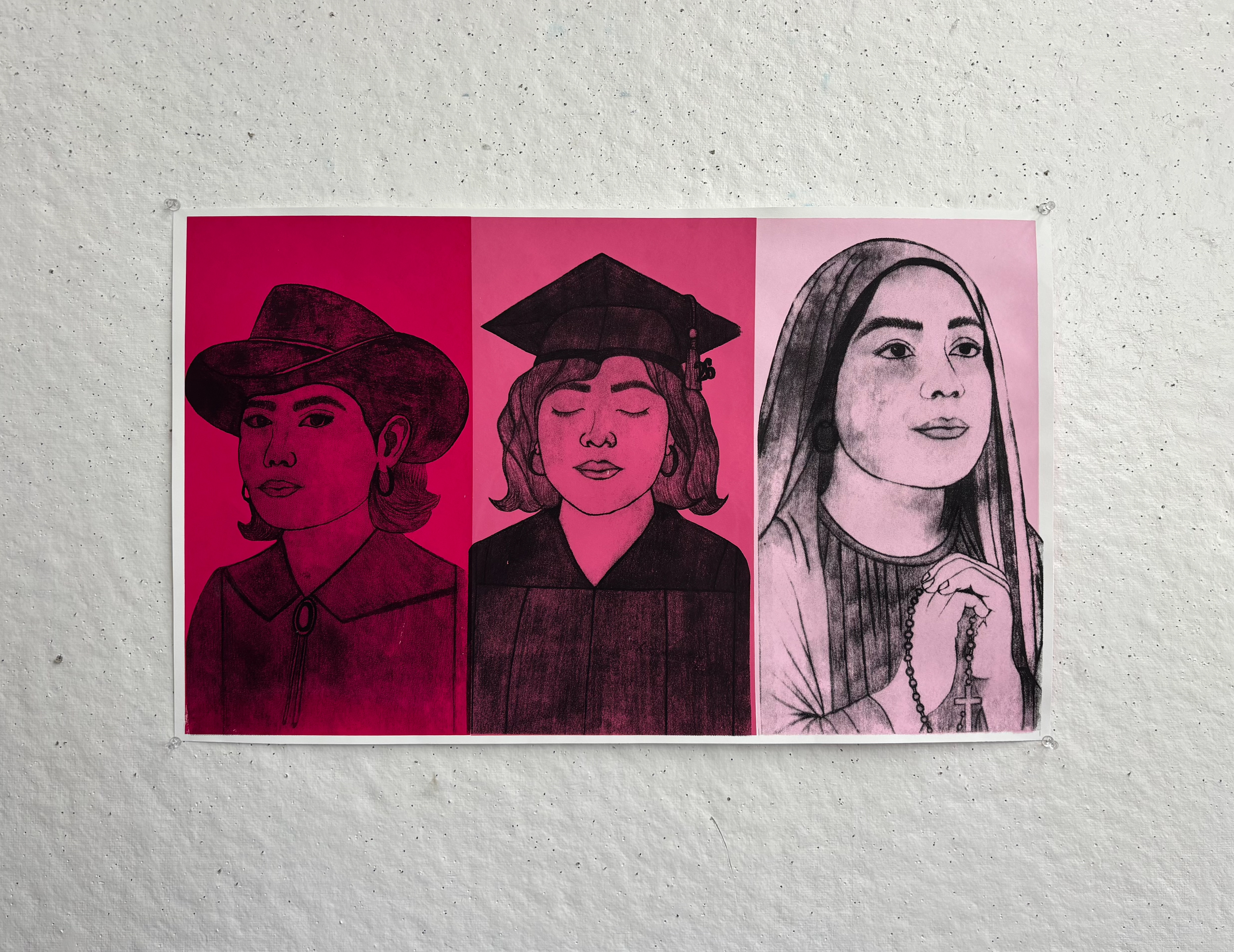
Graphite drawing to screen printing
Graphite drawing to screen printing
Dreaming is a series of graphite drawings to screen-printed self-portraits. While watching an American cowboy western, I wondered how the story would change if all the cowgirls were replaced with representations of femininity. I imagined myself as a “bad cowgirl of the West,” reflecting on my own femininity alongside culturally revered figures, like my depiction of myself as Our Lady of Guadalupe on the right, juxtaposed with myself on the left.
Graduating college as the first woman in my family lineage, I pictured myself dreaming in the cap and gown of the woman I can become, even in my most dramatic forms. The color pink conveys where traditional femininity intersects with challenge, bold yet delicate. Imagining a self rooted in cultural heritage yet free to rewrite my story.
How to Cure a Ghost (2025)
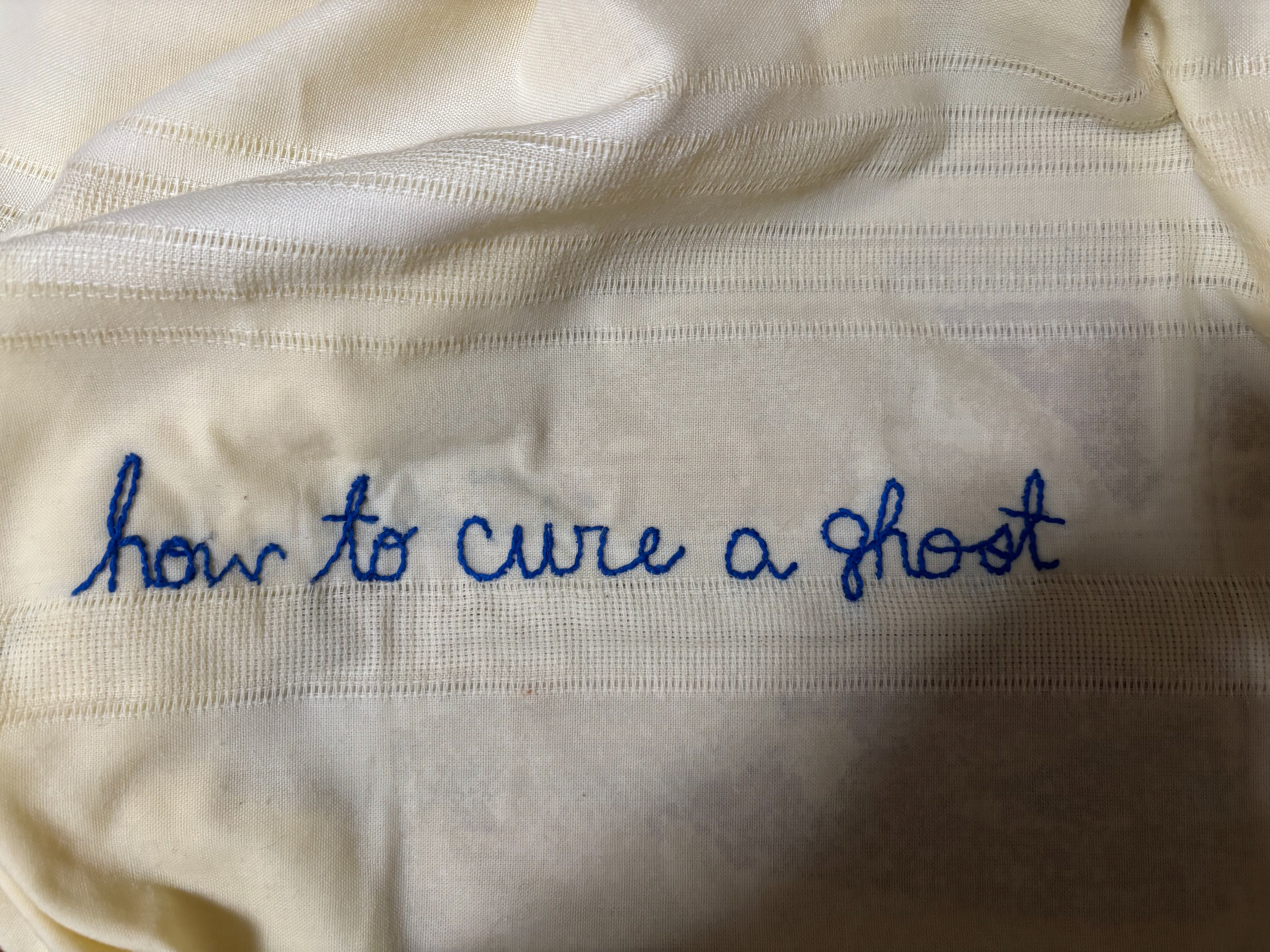
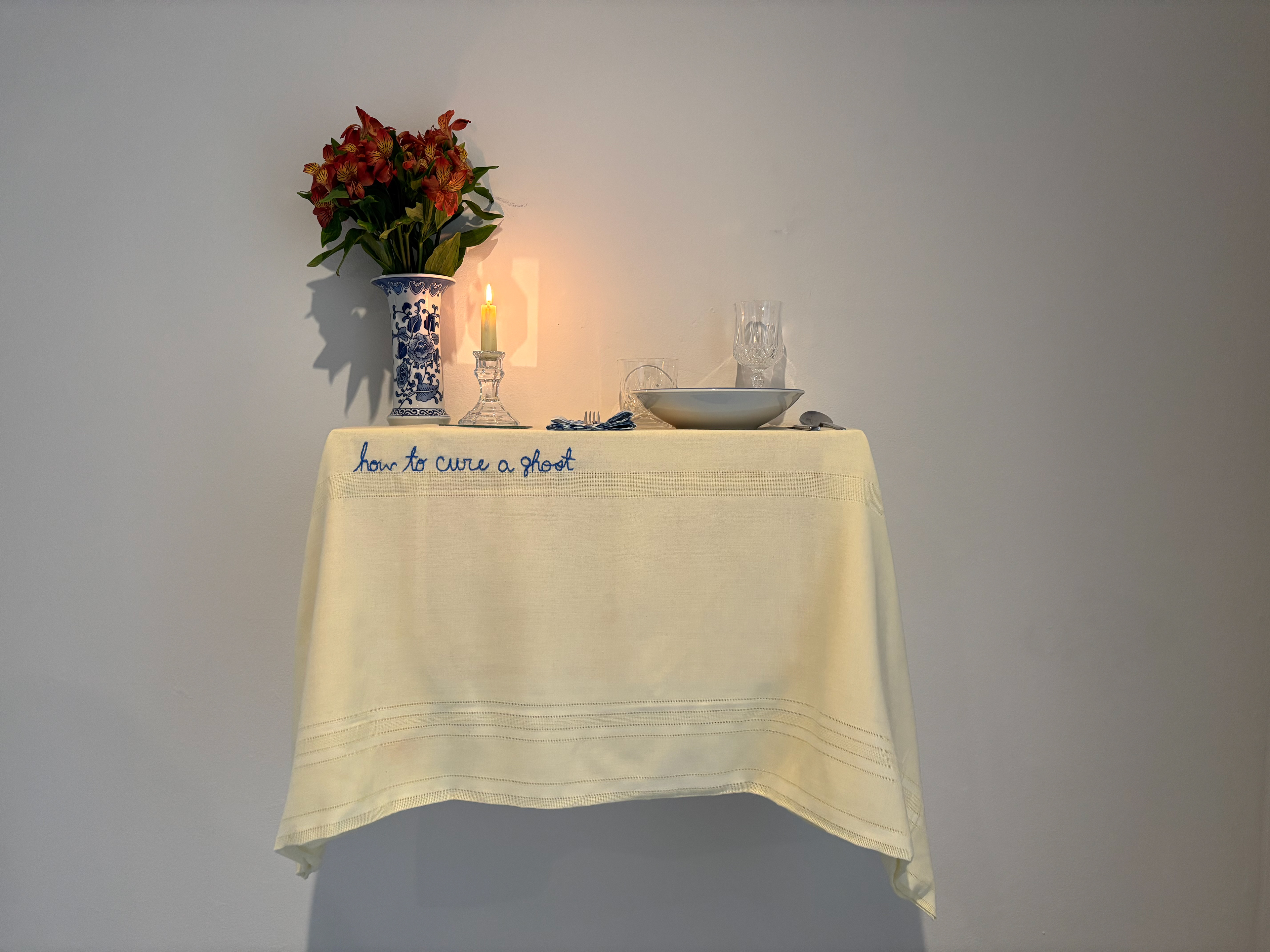
Built table installation; embroidered linen, wood, porcelain, silverware, glass, fresh flowers
Built table installation; embroidered linen, wood, porcelain, silverware, glass, fresh flowers
A sculptural table set for one, How to Cure a Ghost honors the lingering presence of my dear, late grandmother. The embroidered phrase evokes grief and the domestic labor of memory. Drawing from early experiences of learning to set a table with her, the piece becomes a quiet altar, where absence is felt in every gesture of care, arrangement, and stillness.
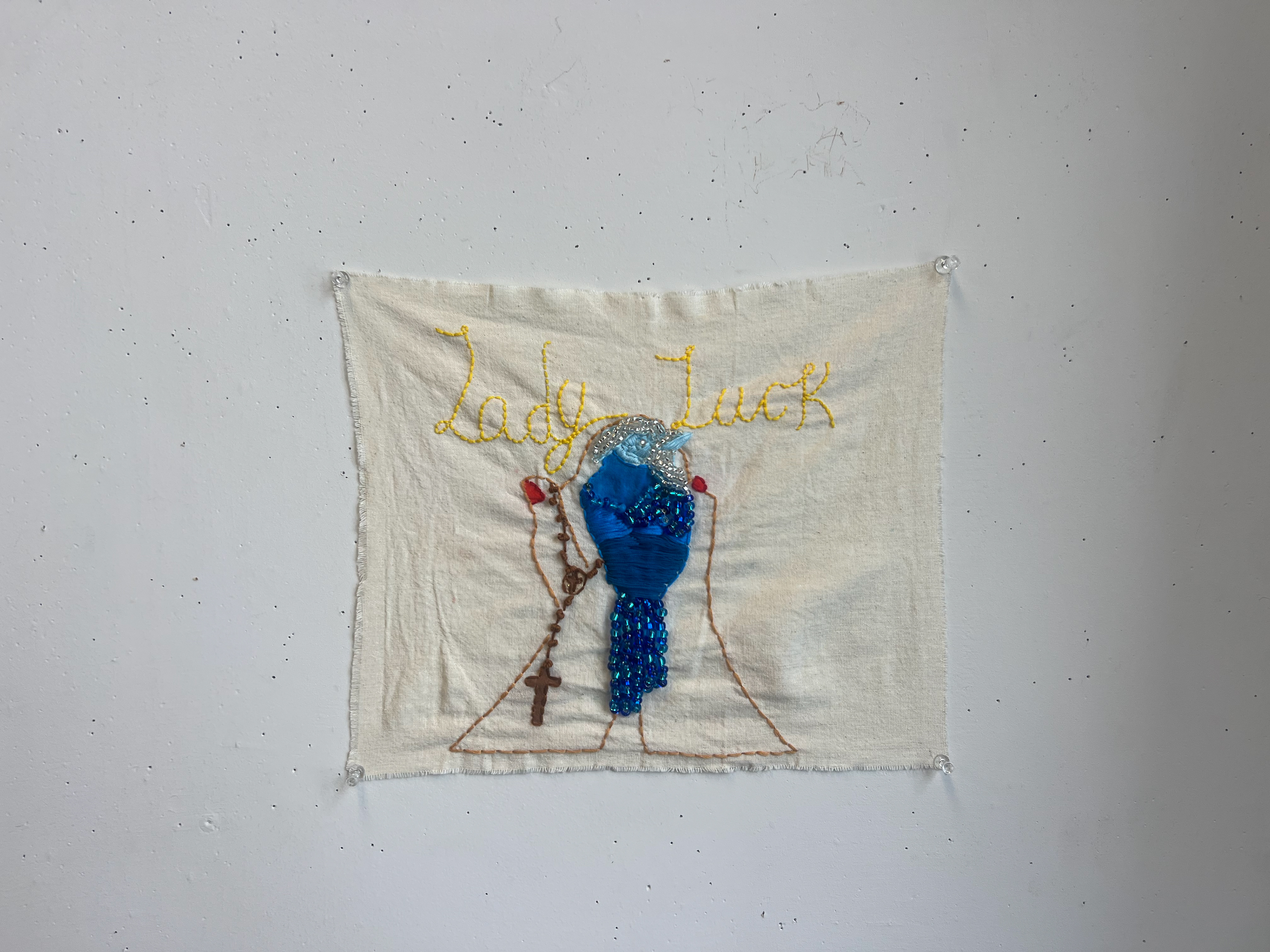
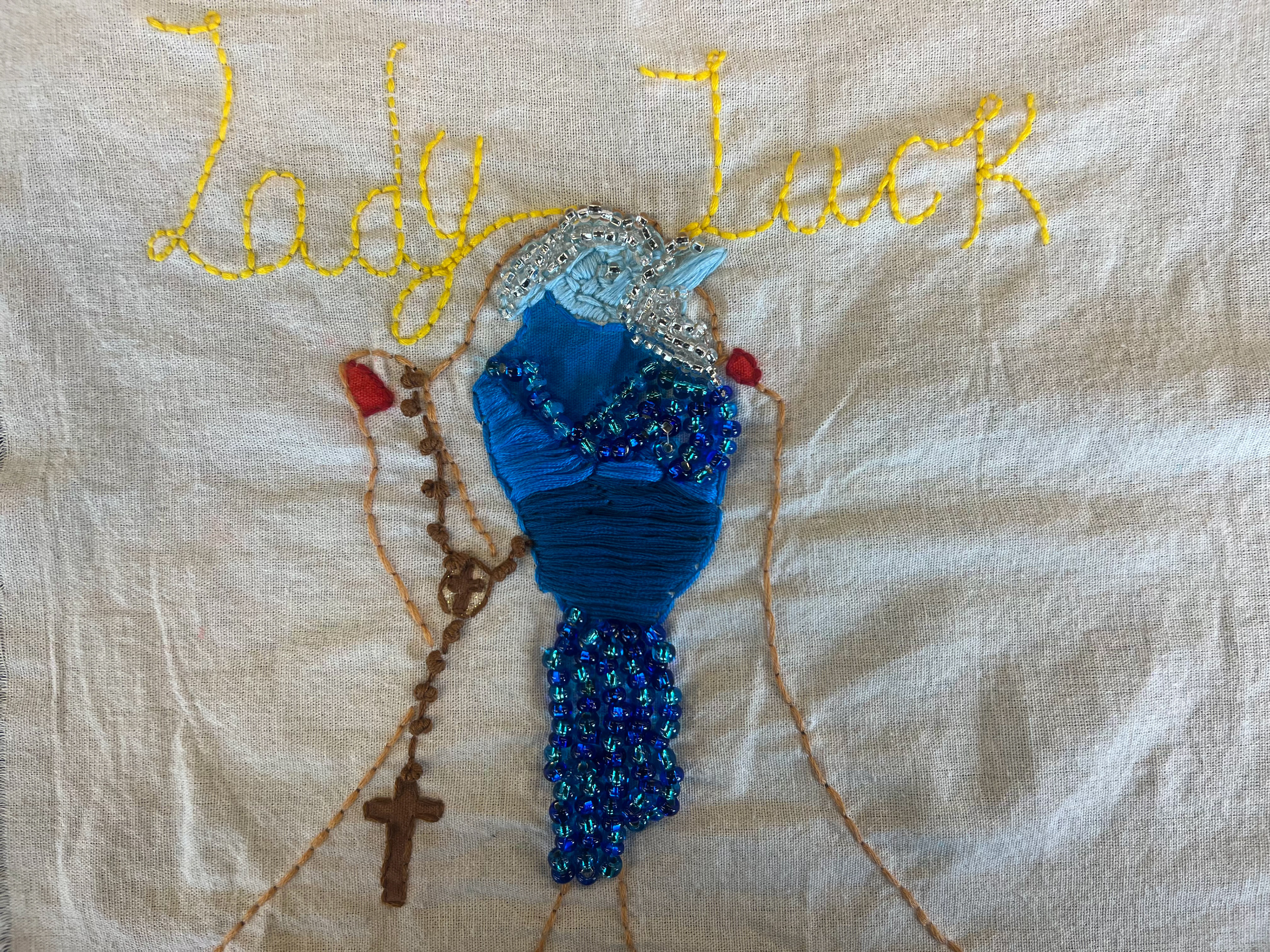
Lady Luck (2024)
Embroidery with beads on fabric
Embroidery with beads on fabric
Lady Luck explores the intersection of chance, belief, and the complexity of personal fortune. Through intricate embroidery and beading, this piece captures the delicate, almost fragile nature of luck and the human tendency to personify it. The work combines traditional craft techniques with symbolism to evoke both the allure and uncertainty that accompany the concept of fate.
Imposter Syndrome (2024)
Sound art installation; recorded voicemails, prerecorded audios, audio playback
Sound art installation; recorded voicemails, prerecorded audios, audio playback
This sound piece explores the emotional experience of imposter syndrome, evoked through the sound of a bike bell and recorded voicemails from my mother. Riding a bike was one of my earliest accomplishments, but the repetitive ringing of the bell symbolizes the nagging feeling of doubt that often follows success. The voice, familiar yet distant, reflects a fractured sense of achievement, amplifying the internal conflict between feeling accomplished and undeserving. The work highlights the tension between moments of pride and the persistent echo of self-doubt.
Digital Media